
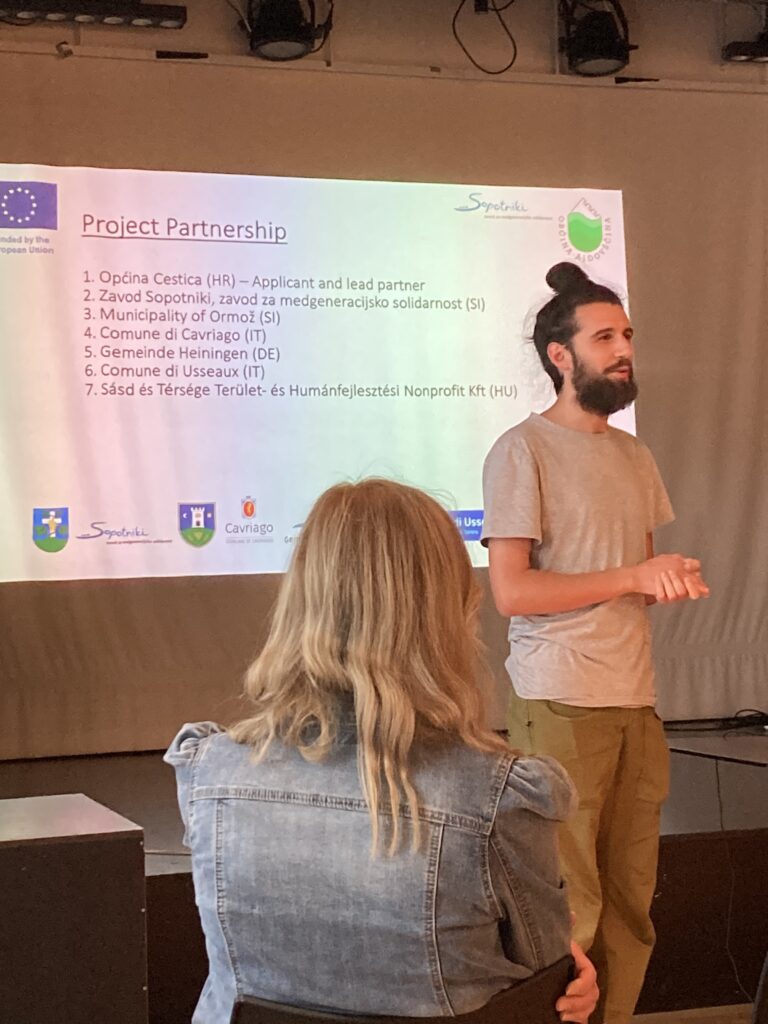
This project involves rural communities in 5 EU countries (HR, SI, IT, DE, HU), the partnership is represented by 5 municipalities and 2 non-profit organisations.
All 7 partners faced major challenges during the COVID-19 pandemic, and now, working together, they aim to improve citizen engagement in civil society actions and democratic processes, with a focus on rural communities. Promuovere la cittadinanza attiva e il volontariato in questi tempi di pandemia è stato complicato.
The actions carried out by NGOs and public bodies have had to be constantly reinvented, which has made it more difficult for the most vulnerable groups (the elderly, people with disabilities and refugees) to access public services and participate in democratic processes.
The project is organised in 7 3-day events (in HR, SI, IT, DE, HU).
Each event includes the sharing of good practices showing how citizens can engage as volunteers in actions addressing local issues (civil protection, solidarity, environmental protection, social inclusion, education, culture and mental health). Activities are designed so that partners can collect citizens’ opinions on the Europe they want. The project will provide evidence of how solidarity works and how Agenda 2021-27 supports rural areas in the post-COVID-19 phase (and in any new critical situations). Workshops, presentations, site visits, group work and demonstrations will encourage volunteering and improve understanding of how citizen engagement in local actions in the EU contributes to sustainable growth. The project is estimated to involve and inform a total of 350,000 citizens (as indirect participants, while 590 direct participants are expected.) on how they can contribute to voluntary activities in post-COVID local actions. A cooperation agreement between the partners will define priorities and long-term actions to be shared and implemented. The project will improve citizens’ awareness of the functioning of EU policies and values and enable the consolidation of new cooperation between rural areas in the EU.
Partnership
- Project Coordinator:
OPCINA CESTICA (CESTICA), PIC 932470022, located at DRAVSKA 1A, CESTICA 42208,
Croatia,
Project Partner:
- ZAVOD SOPOTNIKI, ZAVOD ZAMEDGENERACIJSKO SOLIDARNOST (Sopotniki), PIC 904286963, with headquarters at KRASKA ULICA 2, SEZANA 6210, Slovenia
- OBCINA ORMOZ (Ormoz), PIC 911144087, with headquarters at PTUJSKA CESTA 6, ORMOZ 2270, Slovenia
- COMUNE DI CAVRIAGO (Cavriago), PIC 898424477, with headquarters at PIAZZA DON G DOSSETTI 1, CAVRIAGO 42025, Italy
- GEMEINDE HEININGEN (Heiningen), PIC 931880456, with registered office at HAUPTSTRASSE 30, HEININGEN 73092, Germany,
- COMUNE DI USSEAUX (Usseaux), PIC 886937737, with headquarters at VIA CONTE EUGENIO BRUNETTA, 53, USSEAUX 10060, Italy
- SASD ES TERSEGE TERULET- ES HUMANFEJLESZTESI NONPROFIT KORLATOLT FELELELOSSEGU TARSASAG (Sasd), PIC 935913328, with its head office at RAKOCZI FERENC UT 41, SASD 7370, Hungary,
Activities and expected outcomes
Activities will be organised in 7 events (each event will last 2-3 days), one organised by each partner. Each event will be adapted to local and participant needs; however, each event will follow a similar format. Activities per event may possibly include
- Demonstration activities: These activities will be used to promote citizen participation in the activities. The type of demonstration may be, for example, a simulation exercise for cleaning affected areas;
- Workshops: Participants from partner regions will learn about EU policies and programmes in the fields of employment, culture, social inclusion, etc. and how the EU contributes to social inclusion and improved quality of life;
- Good practice presentations and discussions: at the beginning of the event, each organisation will present their projects, activities and objectives, discuss how they were achieved and how EU values (e.g. volunteering) helped to increase the effectiveness of their activities.
- Cultural events (concerts and fairs): cultural events will be jointly organised to help partners familiarise and collaborate on issues of interest, so that participants can see how rural resources can be used to build a community’s identity and sense of belonging. Presentations are also planned to inform participants about the economic impact of these events (e.g. in terms of attracting tourists, increasing revenue for small businesses, raising environmental awareness, etc.).
- Study visits: during the events, participants will be shown some places and contexts where volunteering and active citizenship have influenced the quality of life.
- Project development meetings: partners will work together to develop projects that will be used to address community problems. Each meeting will focus on developing content in specific areas (e.g. culture, agriculture, education, social inclusion, etc.).
Event 1 – Opening event in Cestica, Varaždin County, Croatia
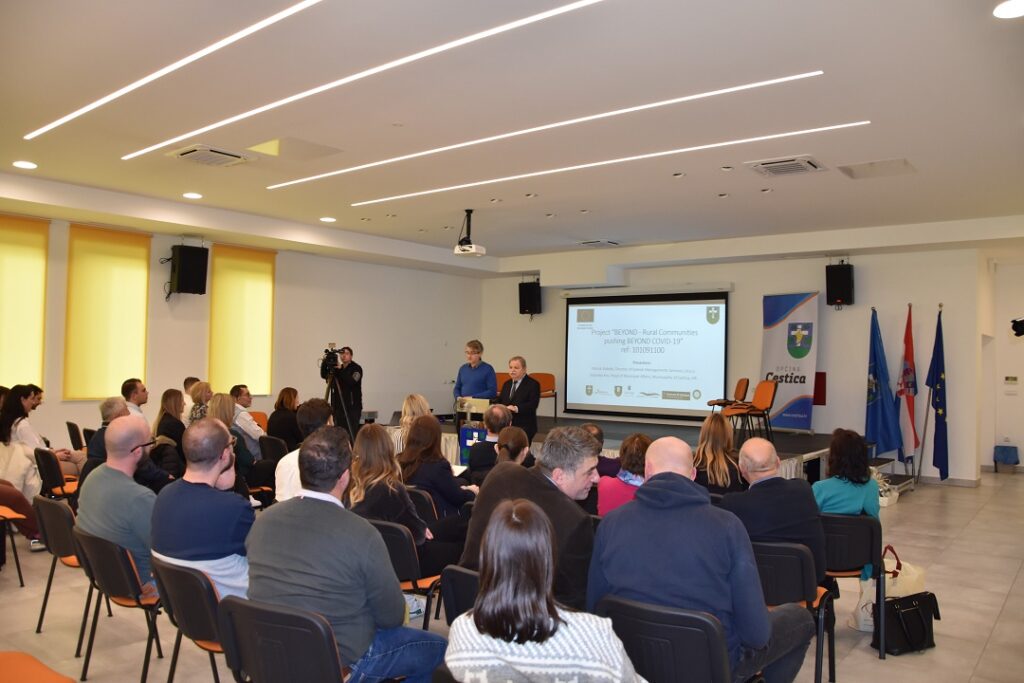
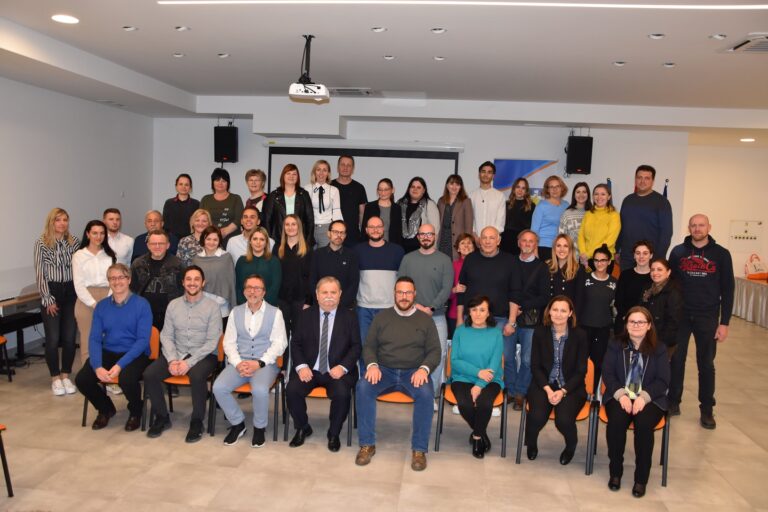
The first event, Kick off meeting, took place over three days (Wednesday 29 to Friday 31 March 2023) in Cestica and Varaždin, Varaždin County, Croatia. All event activities took place on site.
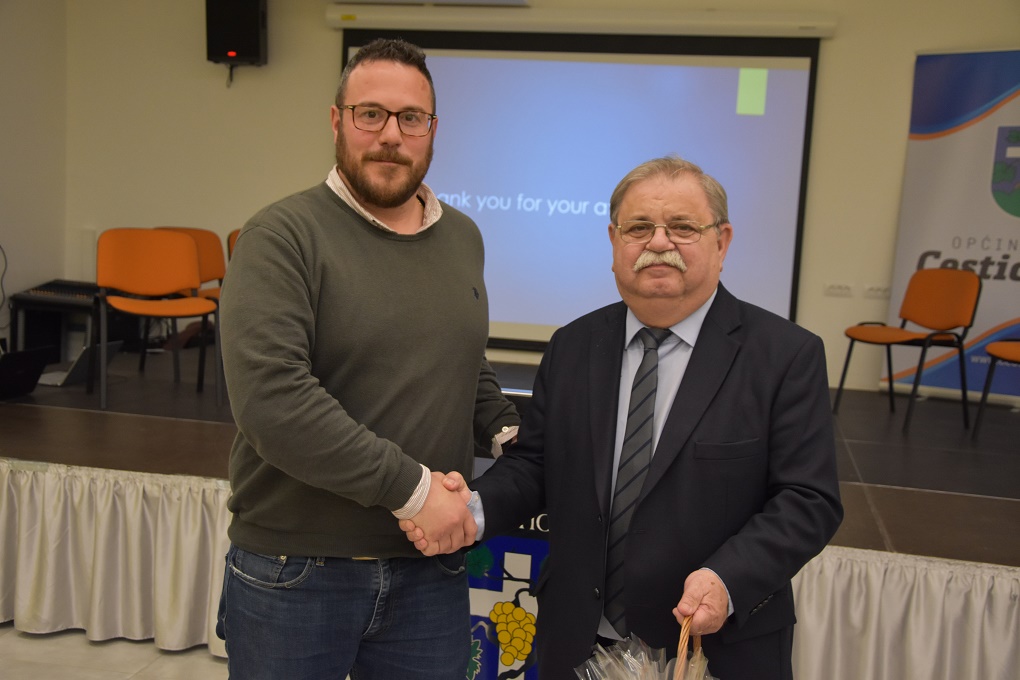
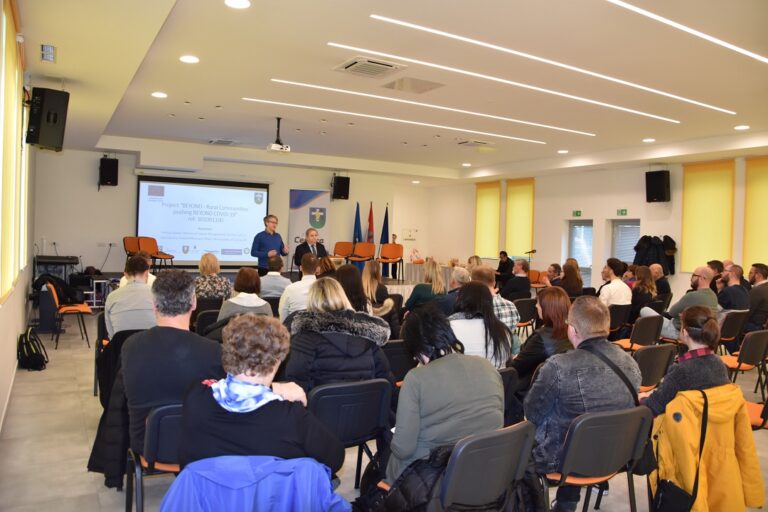
On Day 1, the Municipality of Cestica organized the opening conference for the project at the Municipal Hall of Cestica. The purpose of the conference was to introduce the project to citizens and explain how it contributes to enhancing citizen engagement in civil society. After the opening presentation, the partner representatives presented briefly on they implemented actions relating to civil protection and volunteering during the pandemic. This format allowed participants to exchange know-how and emphasize how they adapted their activities during the COVID-19 pandemic (highlighting how EU values such as solidarity have been incorporated into actions and providing recommendations the lessons-learnt). As a means to engage participants and find out about their needs concerning volunteering in their communities, the conference included an interactive quiz with participants (Via Slido) about the impacts of volunteering during the pandemic. The findings showed that the majority of participants believed that we are moving beyond the pandemic and that rural communities have come close to a full recovery (76% of respondents) and the participants also indicated a positive opinion towards EU values (76%). Regarding the pandemic, 21% participants regarded vaccinations as the main solution to ending COVID-19, while 72% of respondents considered that a combination of actions (vaccines, actions of volunteers, security measures, direct subsidies to citizens) led to rural communities ending the pandemic’s toll on rural communities. In order to fully recover from the impacts of the pandemic, the participants considered that rural communities need to encourage more volunteering, promote social inclusion, and work more with other communities in the EU. Through the Q&A session at the end of the opening conference, participants were able to gain new information and know-ho about how rural communities adjusted civil protection measures, engaged citizens and adapted in order to overcome the pandemic.
Day 2 (Thursday, March 30th, 2023) was held at the Municipal Hall of Cestica. An interactive workshop focusing on how civil protection bodies provided support to citizens during the COVID-19 was organized in order to engage participants and encourage the exchange of know-how. The first part of the workshop included presentations on best practices in civil protection during the pandemic. There were 4 presentations held in total:
- Municipality of Cestica; ESF Project “Zaželi” (Presenter: Marina Dukarić, project manager)
- Dukarić explained that through the project 6 women were trained and employed to provide support services to elderly person in Cestica. It was explained that the activities of the project needed to be adjusted in order to account for the challenging work conditions during the COVID-19 pandemic;
- Red Cross Society of the City of Varaždin: Activities and actions organized and implemented by the Red Cross in rural areas during the pandemic (Presenter: Filipa Blažon Šumečki, EU project manager and general affairs manager)
- Blažon Šumečki presented how the Red Cross incorporates humanitarian/European values in its work and how volunteers and field teams of the Red Cross were able to adjust operations and reach out effectively to persons in need during the pandemic;
- Home for the Elderly/Dom “Novi Život” (Presenters: Iva Roža and Valentina Kocet Martinec)
- Roža and Kocet Martinec described the work of the organization and its mission. After that, they explained the negative impacts that the pandemic had on the health of residents at the home and the mental health of workers. Details were provided on how the staff at the home adjusted their operations and activities in order to ensure that residents could overcome the pandemic;
- Udruga “Hiperaktivni”: The activities of the organization and how they operated during the COVID 19 Pandemic; (Presenters: Tomislav Milec and Matija Hrman)
- Milec and Hrman first described that the association aims to engage youth in the community and encourage them to take action to address various community issues (e.g. mental health and well-being, employment, cultural heritage, etc.), and described the main activities performed annually by the association. The presenters also described how they coordinated with the Red Cross to deliver food and medicine to persons in need during the pandemic.
To end the workshop, Patrick Galeski (from Galeski Management Services j.d.o.o.) held a group activity that takes into account the consequences and impacts of the COVID-19 pandemic. He first presented on how the COVID 19 pandemic mirrors the entire situation faced by citizens during the Influenza Pandemic of 1918-20. This was done in order to show how although many people acted correctly during the pandemic, there are also many that responded poorly. He emphasized that for the most part history repeated in a bad way during the pandemic. To follow-up on that presentation, Galeski conducted a group activity where participants reviewed a scenario about a lack of doctors in a rural community. The participants needed to consider possible solutions and also discussed on how they are addressing similar issues in their communities.
In the afternoon session, the Firefighting department of Cestica, in cooperation with the Varazdin County Firefighting Community, presented their activities and held a short demonstration. Darko Mahjen from the Municipality of Cestica presented on the main activities of the firefighting associations of Cestica (6 firefighting HQs in total) and described how they operated during the COVID-19 pandemic (i.e. included COVID-19 safety measures in their responses). After the presentation, a firefighting demonstration took place at the Municipality which demonstrated how teams cooperate and operate in emergency situations.
On Day 3 (Friday, March 31st 2023) a project meeting was held in Varazdin, at the Varazdin County Palace. The meeting was held in order to describe the outcomes of the project event and discuss the next steps in project implementation. Representatives of the media were present in order to cover the project. At the meeting, the representatives of the project provide statements to reporters about the project and its expected results. In addition to this, a short tour of the city of Varazdin was organized for participants in order to introduce them to the city and Varaždin County’s cultural heritage.
Program of the event ; presentations from the event:
- Municipality of Cestica; ESS project “Wish” (representative: Marina Dukarić, project manager)
- Society of the Red Cross of Varaždin: (Lecturer: Red Cross Varaždin: Activities and measures organized and implemented by the Red Cross in the countryside during the pandemic (Lecturer: Filipa Blažon Šumečki, Ph.D., EU project manager and general affairs manager)
- Home for the elderly/Home “Novi Život” (Lecturers: Iva Roža and Valentina Kocet Martinec)
- “Hiperaktivni” Association : (Representatives: Tomislav Milec and Matija Hrman): Activities of the organization and its operation during the COVID 19 pandemic; (Representatives: Tomislav Milec and Matija Hrman)
- Varaždin County Fire Brigade ; Firefighting activities in Cestica (Lecturer: Dakro Majhen)
- A group activity and presentation comparing COVID-19 to the Spanish flu pandemic of 1918-20;
Event description sheet (in English only) Summary of participant feedback and responses
Event 2 – Ajdovščina, Slovenia
The event took place over three days (from Wednesday, June 7, to Friday, June 9, 2023) in Ajdovščina, Slovenia. All event activities were held on site. The activities were organized in such a way that the following goals were achieved:
- raise awareness of how intergenerational solidarity builds a sense of belonging to the community and how voluntary activities benefit the entire community
- reflection on the impact of the COVID-19 pandemic on older and younger generations
- to show how solidarity between citizens contributes to the strengthening of local measures
Day 1:
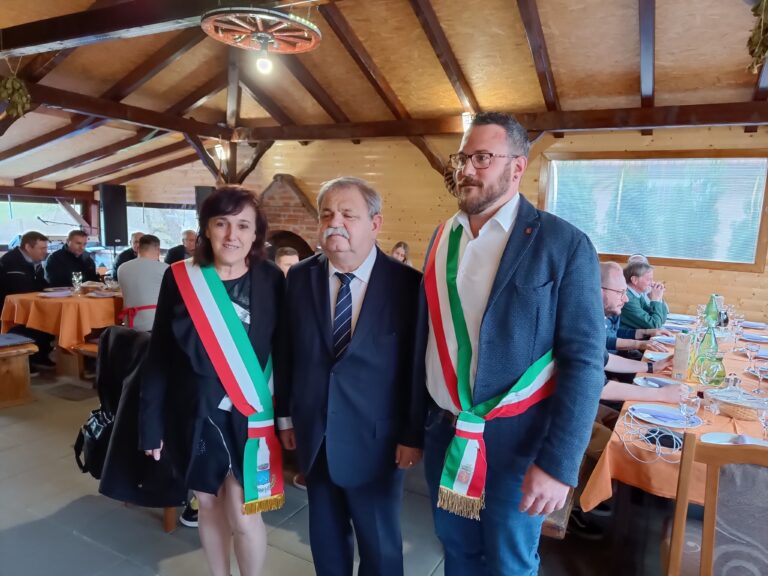
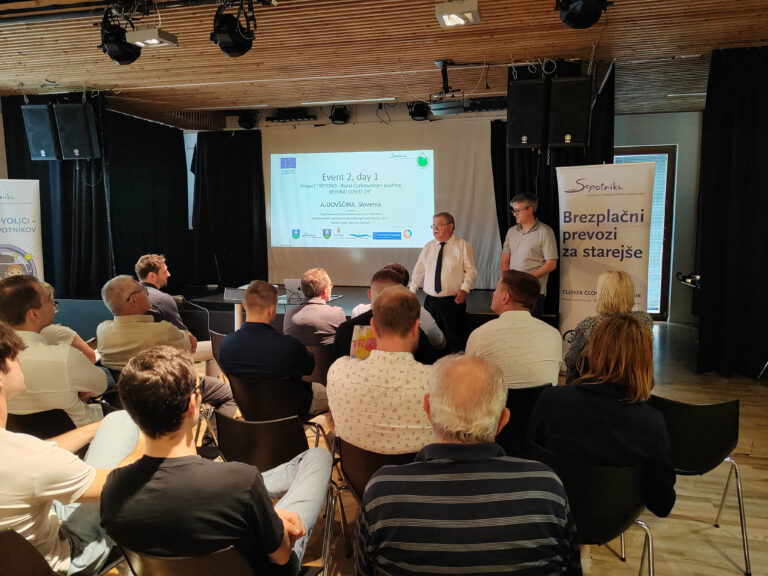
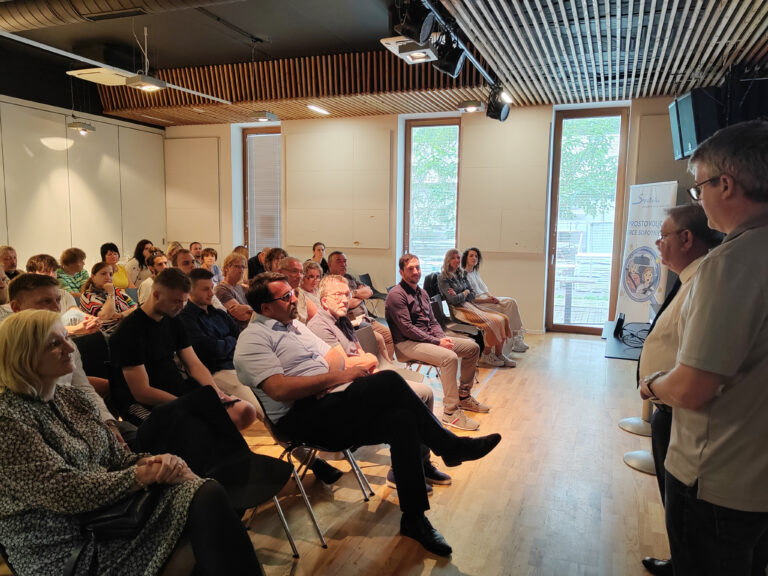
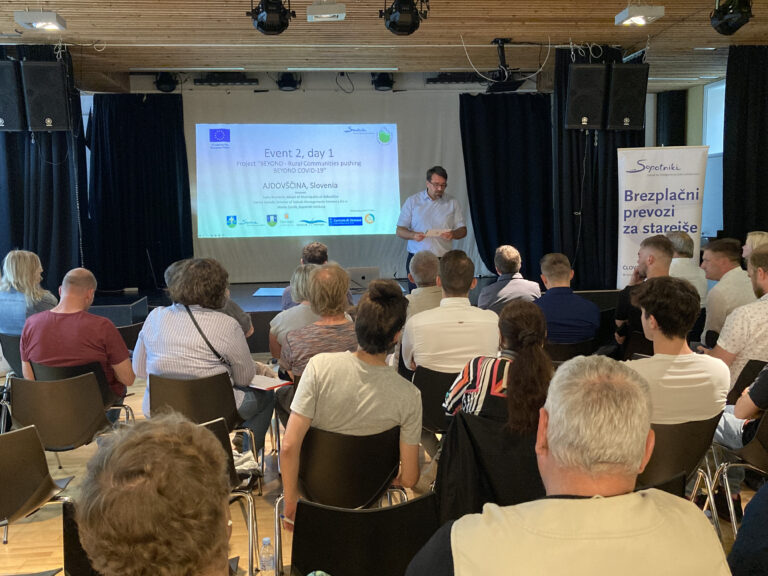
The opening ceremony, interactive questionnaire and group activities (breakout sessions) were held on the first day of the event. The opening day of the event was marked by an informative speech by the mayor of the Municipality of Ajdovščina, Tadej Beočanin. He emphasized the diligent efforts of the municipality to promote the involvement of citizens in the formation of local policies. The mayor emphasized the importance of promoting not only economic development, but also promoting the improvement of citizens’ quality of life in vital areas such as education, sports, care for the elderly and support for other vulnerable social groups. The event was further enriched by the mayor of the municipality of Cestica, Mirko Korotaj, who also shared insights and experiences from his municipality and drew some parallels between what happened during Covid-19 and the current problems with floods and landslides.
After the opening words of the mayors, Patrick Galeski (representative of Cestica) presented the results of event 1 of the project. This was followed by a short presentation of the project partners, who presented their activities and summarized the main lessons learned from their work during the COVID-19 pandemic.
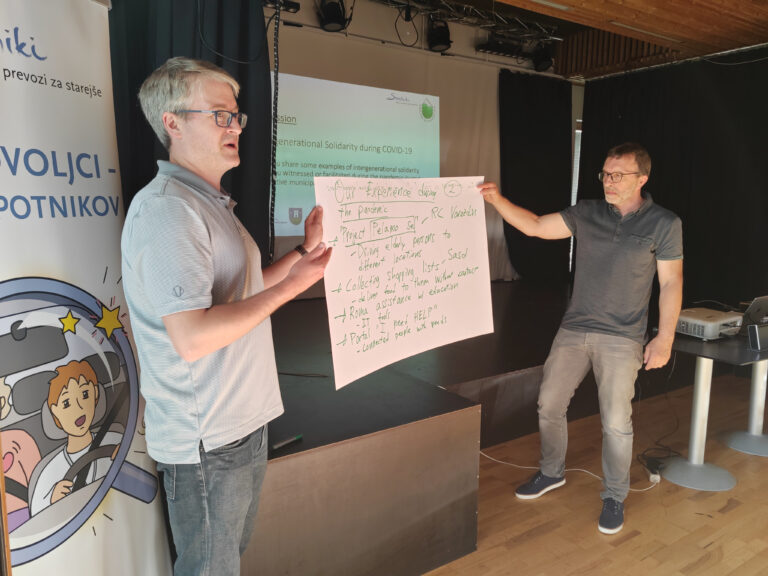
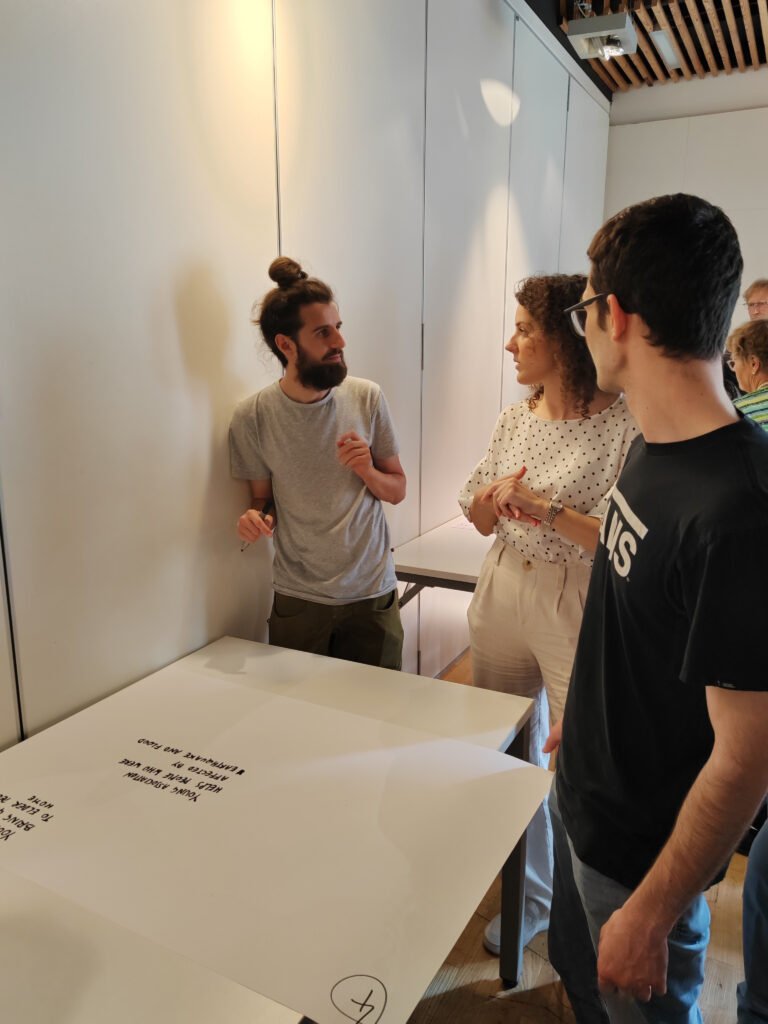
In the next activity, the participants answered an interactive questionnaire on their smartphones (via the Mentimeter application), which reminded them of the basic concepts of intergenerational cooperation, solidarity and volunteerism. After the participants completed the questionnaire, the responses were reviewed and discussed to highlight the importance of volunteering (the right way). After the quiz, separate groups followed, in which all participants discussed the topics discussed: 1) Intergenerational solidarity during COVID-19, 2) The role of local authorities and non-governmental organizations during the pandemic, 3) Looking ahead: The groups presented their findings and examples of good practices, which contributes to the formation of new ideas for the long-term promotion of intergenerational solidarity between partners/participants.
Day 2:
Attended by a large group of enthusiastic participants, the second day of the event offered a wealth of knowledge on bottom-up practices and collaborations that can significantly improve the quality of life in rural communities.
The day’s program included an exhibition/presentation of free transport services for the elderly, an initiative designed by Zavod Sopotniki. The director of the institution presented how the story of “Sopotnikov” (i.e. Companions) began, how the model of free transportation works, and highlighted the adjustments made by the institution to be able to carry out its activities during the pandemic (installation of Plexiglas barriers, employment staff, delivery of food and medicine, etc.) During the presentation, the information infrastructure developed by the institution, which enables it to work efficiently and transparently, was also presented in more detail.
The presentation was followed by a group activity: a demonstration exercise on good and bad practices (“do’s and don’ts”) in providing support to the elderly during the pandemic and sharing experiences.
The second presentation was made by Zavod Dobra pot on the platform “The Lore” (https://izrocilo.si), which was developed during the Corona measures, when it was not possible to hold live workshops and activities. The Lore project is based on the need to preserve the heritage of the local areas of Brkinov and Karst. Its goal is to transfer the value of heritage to younger generations, to raise awareness of the importance of preserving the area’s rich natural and cultural heritage, and to demonstrate the modern potential of how heritage can be used to develop entrepreneurship in the countryside. The third presentation was dedicated to the ToyotaGO service of Toyota Adria doo (https://www.toyota-go.si), a modern mobility solution designed specifically for rural areas where existing public transport may not provide optimal results. In addition to the presentation of the mobile application for booking transport, the presentation described a model for planning and grouping transport, which aims to optimize routes and ensure the sustainability of the solution. Emphasis on key target groups was presented: young people (extracurricular activities), seniors (access to services in the city – free of charge for users of the services of the Sopotniki Institute).
The last presentation/activity offered participants a deeper understanding of the participatory processes used by the Municipality of Ajdovščina, which included an explanation/presentation of how participatory budgeting empowers citizens to participate in decision-making and project financing in their local community. It was explained how Ajdovščina allocates funds for the initiative, what are the steps in approving local measures that are financed with participatory budgeting, and examples of projects that are co-financed at the local level with this approach.
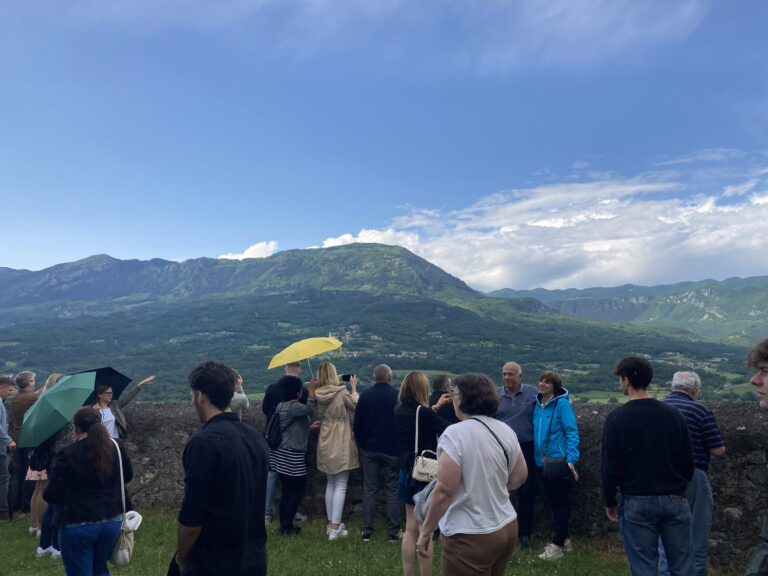
The day ended with a guided tour of the Vipava Cross with a culinary dinner at Sinji Vrh, which enabled the participants to become even more familiar with the culture and heritage of Ajdovščina. Such an approach also enabled the participants to cooperate with each other, deepen relationships and exchange knowledge in an informal environment.
Day 3:
On the third day, a project meeting was held at the headquarters of the municipality of Ajdovščina. At the meeting, the participants gave a short assessment of the event. This was followed by an overview of the current status of the project (planning, communication, reporting) and setting a date and tentative content and activities for the third event, which will take place from 27 to 29 September 2023 in Heiningen, Germany.
Outside the meeting, the participants enjoyed guided tours of the picturesque village of Vipavski Križ and the lively town of Ajdovščina, thus providing an unforgettable end to the rich three-day event. Sopotniki and the Municipality of Ajdovščina prepared press releases in cooperation with the partnership. This ensured that the media reported on it and that the general public was aware of the best practices of Sopotnik and Ajdovščina in the field of support for the elderly population.
With this approach to the organization and implementation of the event, the participants learned:
– how to involve and connect older and younger generations (especially in times of crisis such as COVID-19);
– learned about the best methods and practices in terms of protecting local heritage and preserving the knowledge and experience of all generations.
Participants were also able to collaborate and design new project ideas (related to mobility solutions for the elderly and other people in need).
More information about the event and the project is available in the following materials (in English only):
- Program of the event ;
- presentations from the event:
- Event description sheet
- Summary of participant feedback and responses
Disclaimer: Funded by the European Union. Views and opinions expressed are however those of the author(s) only and do not necessarily reflect those of the European Union or the EACEA. Neither the European Union nor the granting authority can be held responsible for them
For more info on the Beyond project please contact:
Eddy Galeotti
Centro Studio e Lavoro “La Cremeria” srl
Via Guardanavona, 9 – 42025 Cavriago (RE)
Tel: 0522/576911 – Fax 0522/576680
politichecomunitarie@csl-cremeria.it
www.csl-cremeria.it
